
San Diego Directory Starting Points
San Diego people directories are arranged by purpose. Staff pages identify public officials and work contacts. Education records name district leaders. County indexes connect people to recorded documents or parcels, while state license and business tools identify a professional or an entity contact. Historical directories place residents and merchants at an address in a given year. The table leads with the source most likely to answer each kind of question.
| Directory | Who It Identifies | Keeper | How to Use It |
|---|---|---|---|
| City department and staff pages | Departments, officials, and public staff | City of San Diego | Free web pages |
| SDUSD and CDE district record | District leaders and central contacts | District and California Department of Education | Free web records |
| California Personnel Office Directory | State agency personnel and payroll offices | State Controller | A-Z web browse |
| Recorder and assessor indexes | Document parties and property owners | San Diego County ARCC | Web, kiosk, or copy order |
| Professional and business lookups | Licensees, entities, and filing parties | California boards and Secretary of State | Free web search |
| City directories and newspapers | Past residents, merchants, and families | SDPL and City Archives | Online subsets, library, or email |
Use a current directory for a current public role. Use a dated source when time or place matters. A name in an index proves only that the person appears in that source. It does not establish every fact about the person.
San Diego Government Staff Directories
The City of San Diego departments directory routes readers to office phone numbers, email addresses, and department pages. It is an office directory, not a full employee list. The City Clerk, Development Services, Planning, and Auditor are among the named departments. The captured directory shows how the city groups public contacts by function.
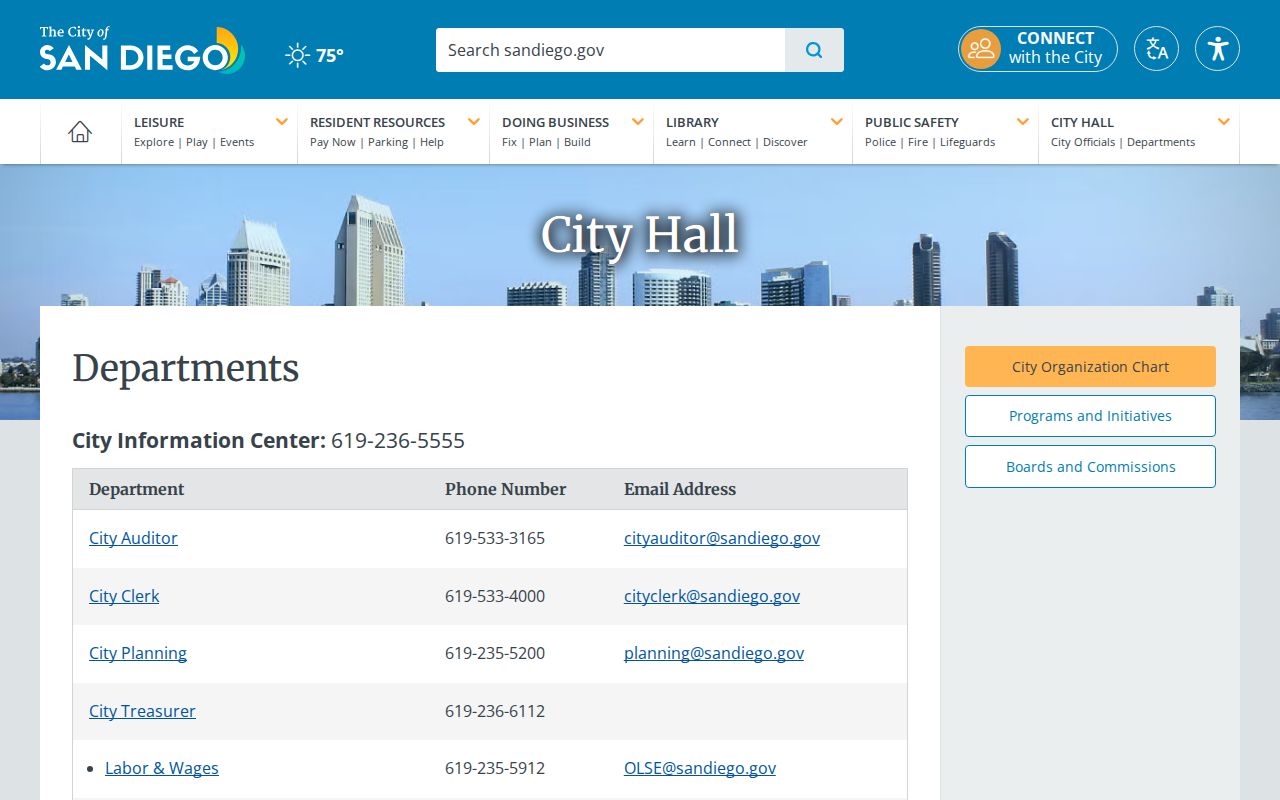
That structure helps when a staff member has no personal profile. Call or email the department, give the person’s name or role, and ask for the right public contact.
The San Diego mayor’s staff page is more person-specific. Entries pair names with titles and work email addresses, including leadership and deputy roles. Its screenshot illustrates the fields found on a typical city staff page.
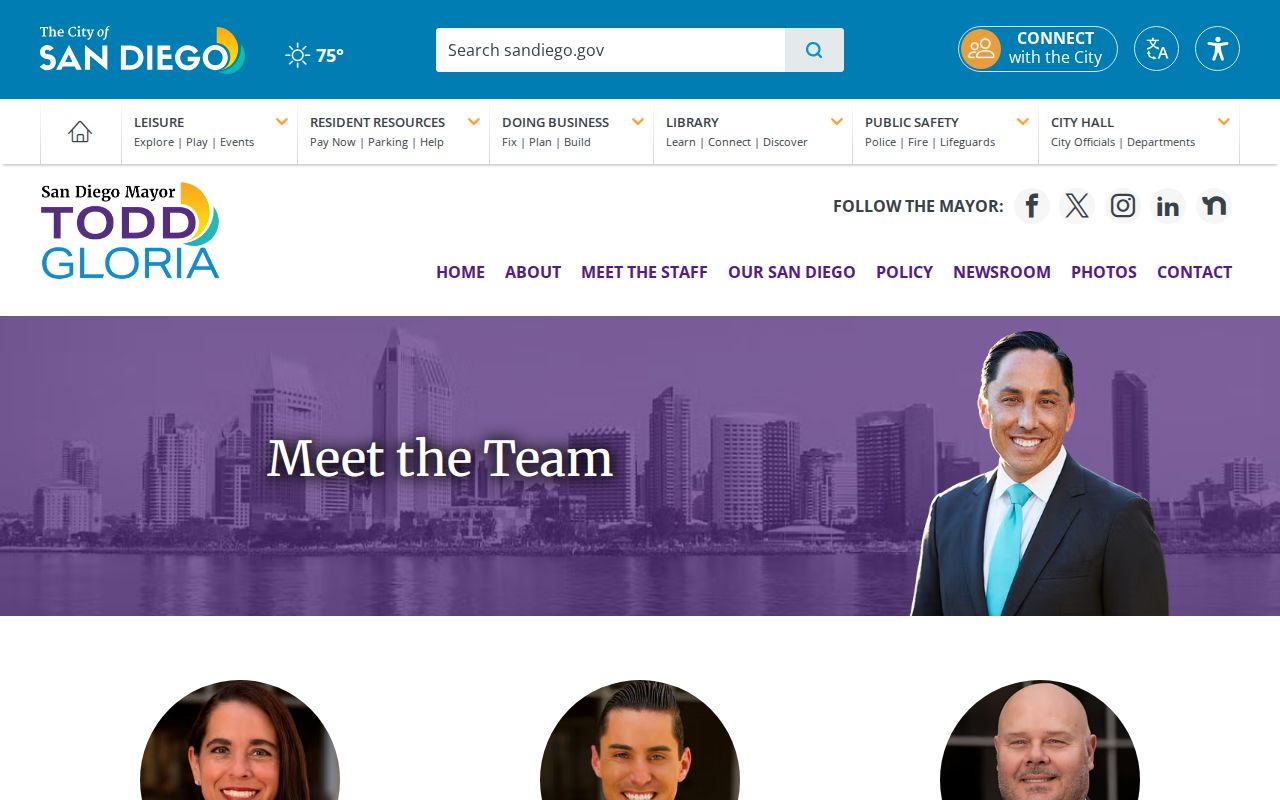
A city page may omit a direct phone or office room. In that case, the department’s main contact remains the sound fallback.
| Name | Public staff member’s listed name |
|---|---|
| Role | Title, office, or policy function |
| Official work address when published | |
| Phone | Direct work number on some staff pages |
| Photo | Shown on the Commission on Police Practices staff roster |
State Contacts Near San Diego
California’s government directory works at the agency level. The California Personnel Office Directory lists state personnel and payroll offices by agency, including an A-Z browse and California State University entries. It is useful when a San Diego contact works for the state rather than the city or county.
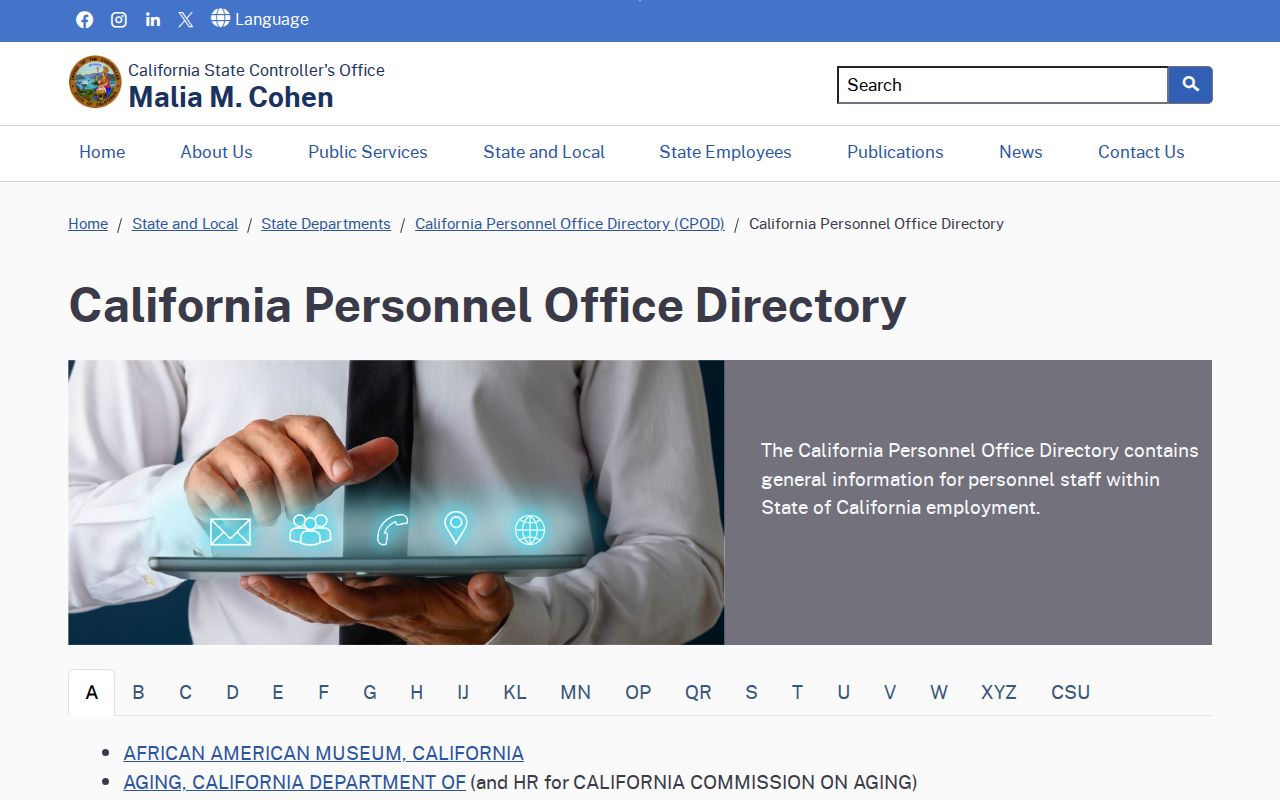
The directory points to the proper personnel office, not a private home contact. Start with the agency name. If only a program or board is known, use the A-Z list to identify its parent office.
San Diego School Directory Records
San Diego Unified publishes a district directory and central contact. The more detailed California Department of Education district record names the superintendent and chief business official and supplies the district’s phone, fax, email, website, and CDS code. The CDS code is California’s unique identifier for a school or district.
This official record is best for district leadership and central administration. Campus faculty pages can add public work contacts, but no unverified UC San Diego or San Diego State search fields should be assumed.
| Displayed Field | Record Type | San Diego Use |
|---|---|---|
| District name | Identity field | Confirms San Diego Unified |
| CDS code | Unique code | Distinguishes the district record |
| Phone, fax, and email | Contact fields | Routes a central inquiry |
| Superintendent | Name and title | Identifies current district leadership |
| Chief business official | Name and title | Identifies the listed administrative contact |
Historical school reports and campus material may also appear in San Diego History Center collections. Those archive records serve a different task than the current district directory.
San Diego Public-Record Directories
Several public indexes act like directories even though they were made for record access. The San Diego County recorder index lists grantors and grantees, meaning parties transferring an interest in recorded property documents, from 1970 to the present. ParcelQuest links parcels to assessor information. The Superior Court index lists case parties but does not show charges or final disposition. California voter data is restricted and is not a public resident directory.
The recorder’s web result contains indexed details only. Images must be viewed at an ARCC public kiosk or ordered as mailed copies. Assessor data is available through ParcelQuest within stated use limits, while certified copies come from ARCC. General disclosure rules and request steps belong with San Diego public records access, not with the directory listings themselves.
Lawful use: Search official directories for personal research, family history, consumer safety, or civic transparency. Never use a record to stalk, harass, or harm anyone.
San Diego Property Owner Directories
Property systems can turn an address into a parcel trail. SanGIS searches by address, assessor parcel number, or street intersection. ParcelQuest adds assessor parcel details within its access limits. The recorder index then searches names tied to recorded documents. Together they can connect a current parcel, an owner-related record, and past grantor or grantee names.
The roles differ. An assessor roll concerns the parcel and its assessed data. A recorder index concerns filed documents. A city permit record may name an applicant, contractor, owner, or project contact but does not prove who occupied the site. For older occupancy, move from the address to a dated city directory or newspaper.
- APN
- The assessor parcel number used to identify land in county systems.
- Situs address
- The physical property address, which may differ from an owner’s mailing address.
- Grantor and grantee
- The parties giving and receiving an interest in a recorded document.
San Diego License Directories
California’s official license sites are strong people directories when a name is linked to a regulated profession. The Department of Consumer Affairs covers many boards, while separate tools serve contractors, attorneys, and real estate licensees. Search by name or license number when the portal allows it. Then compare the status, classification, or board information with the public facts already known.
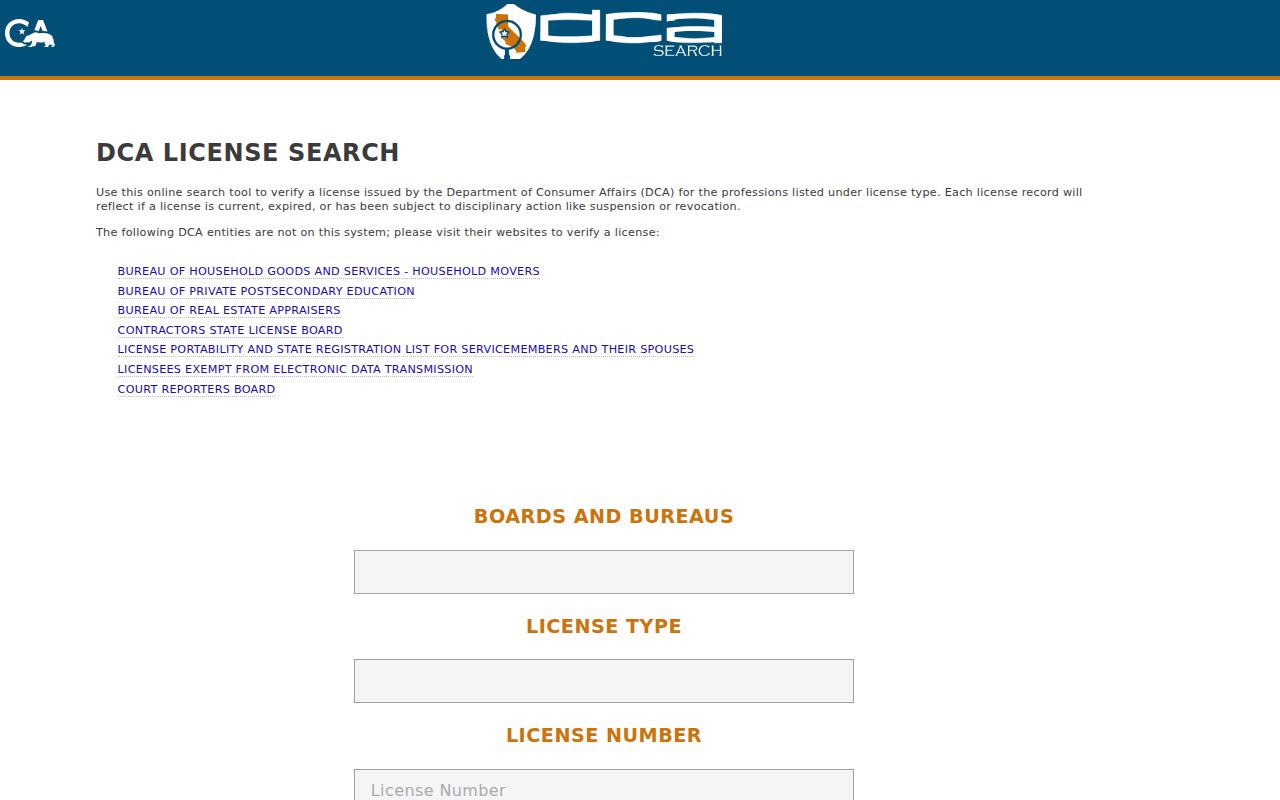
The California DCA License Search provides the broad starting point across consumer boards. Its captured page shows the official statewide portal used for San Diego license lookups.
For narrower work, the State Bar directory covers attorney name, bar number, standing, and discipline information. The contractors board adds classifications, bonds, and status. Board-specific records may be richer than the umbrella search.
San Diego Business Filing Directories
The California Secretary of State business search lists corporations, limited liability companies, limited partnerships, and related filing records. Depending on the entity, a result may identify its name, status, agent or service address, and filing history. The state warns that online data is not a complete or certified record. UCC records form a separate directory of financing-statement debtors and secured parties.
Small local firms may instead appear under a fictitious business name, often called an FBN, at the San Diego County Clerk. FBN filings link a public business name to listed owners. Search both the entity name and reasonable spelling variants. A sole proprietor may be absent from the state entity index yet present in the county filing trail.
Historic San Diego People Directories
The deepest dated collection is at San Diego Public Library. City directories span 1886 through 2021 in Central Library Special Collections. Online subsets cover 1887 through 1925 through San Diego Yesterday and 1925 through 1960 through City Archives. The annual volumes predate phone books and list residents or merchants by name, address, and occupation.
| Collection | Verified Years | What It Adds | Access |
|---|---|---|---|
| San Diego City Directories | 1886-2021 | Names, addresses, occupations, merchants | Special Collections |
| Digitized directory runs | 1887-1925 and 1925-1960 | Dated resident and business entries | San Diego Yesterday and City Archives |
| Great Register | 1888-1892 | Historical voter names and registration data | California Collection |
| San Diego Union | Run back to 1868 | Notices, social items, addresses, and business names | Library holdings |
| Obituary microfilm | Back to 1865 | Deaths and family context | Email or library research |
These dates form a practical timeline: newspaper and obituary records reach the 1860s, a small business directory appeared in 1874, the first city and county directory followed in 1886-87, and the library’s long city-directory run continues into 2021. Later volumes can also support reverse research from a street address to an occupant.
San Diego Obituary Directory Route
The SDPL Genealogy Collection is the main free fallback when no direct online directory answers a family-history question. It has more than 10,000 books, over 1,000 periodical titles, Ancestry Library Edition at library locations, and the Biography & Genealogy Master Index.
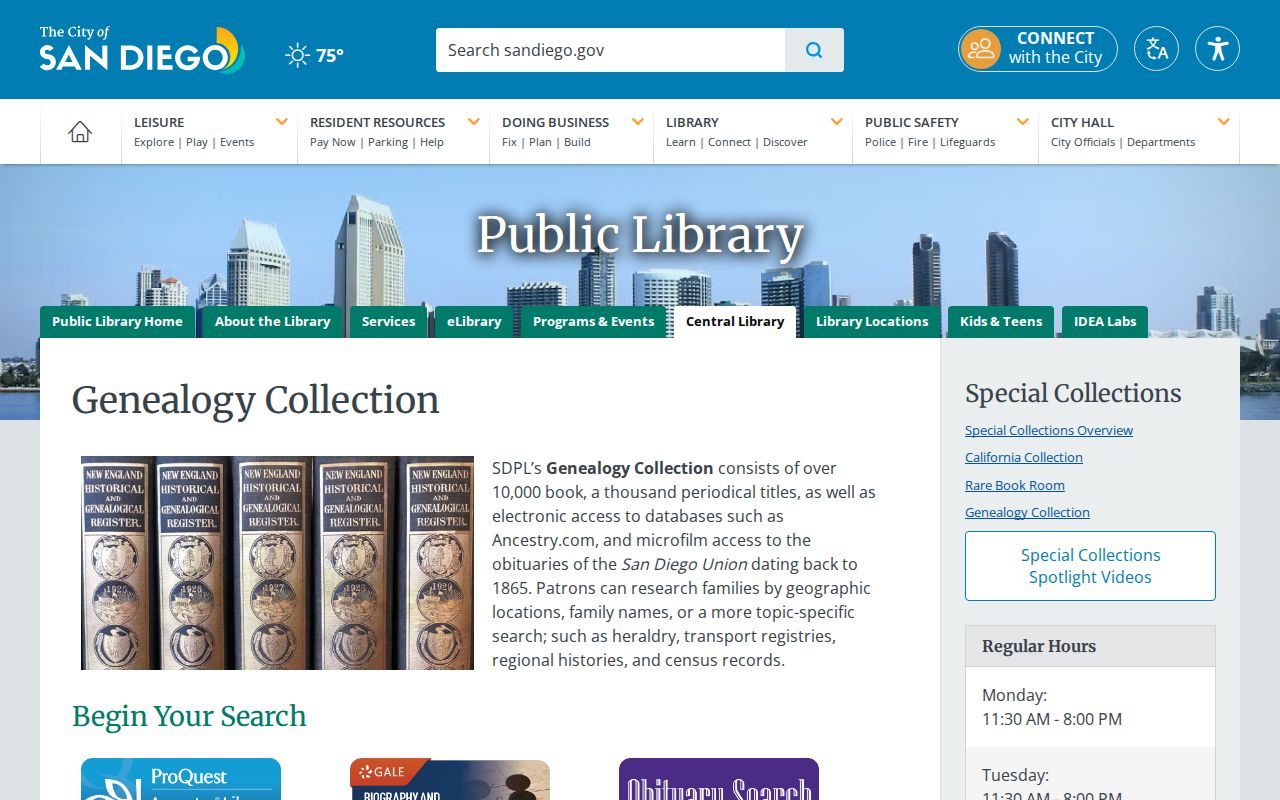
Obituary requests are submitted by email to speccoll@sandiego.gov and draw on San Diego Union microfilm back to 1865. This human-assisted channel is especially useful when the date is approximate or a common name needs family context.
San Diego History Center extends the trail beyond printed directories. Its Document Archives include probate files, coroner inquests, tax lists, school reports, deeds, marriage licenses, court files, and mining records. Early San Diego County deeds can even concern land now in Imperial, Inyo, Riverside, or San Bernardino counties because the county once covered a much larger area. Historical geography therefore determines which archive may hold a person’s record.
Note: Current civic rosters name public participants, but private club, church, or neighborhood lists should not be treated as open resident directories.